Inspecting a Strata Unit or Townhouse: What’s Covered and What Isn’t
Buying a unit or townhouse in Sydney often feels simpler than buying a freestanding house, with less land and less maintenance. But when a building is shared, so are its problems. Knowing what a building and pest inspection covers, and what it does not, helps you avoid expensive surprises after settlement.
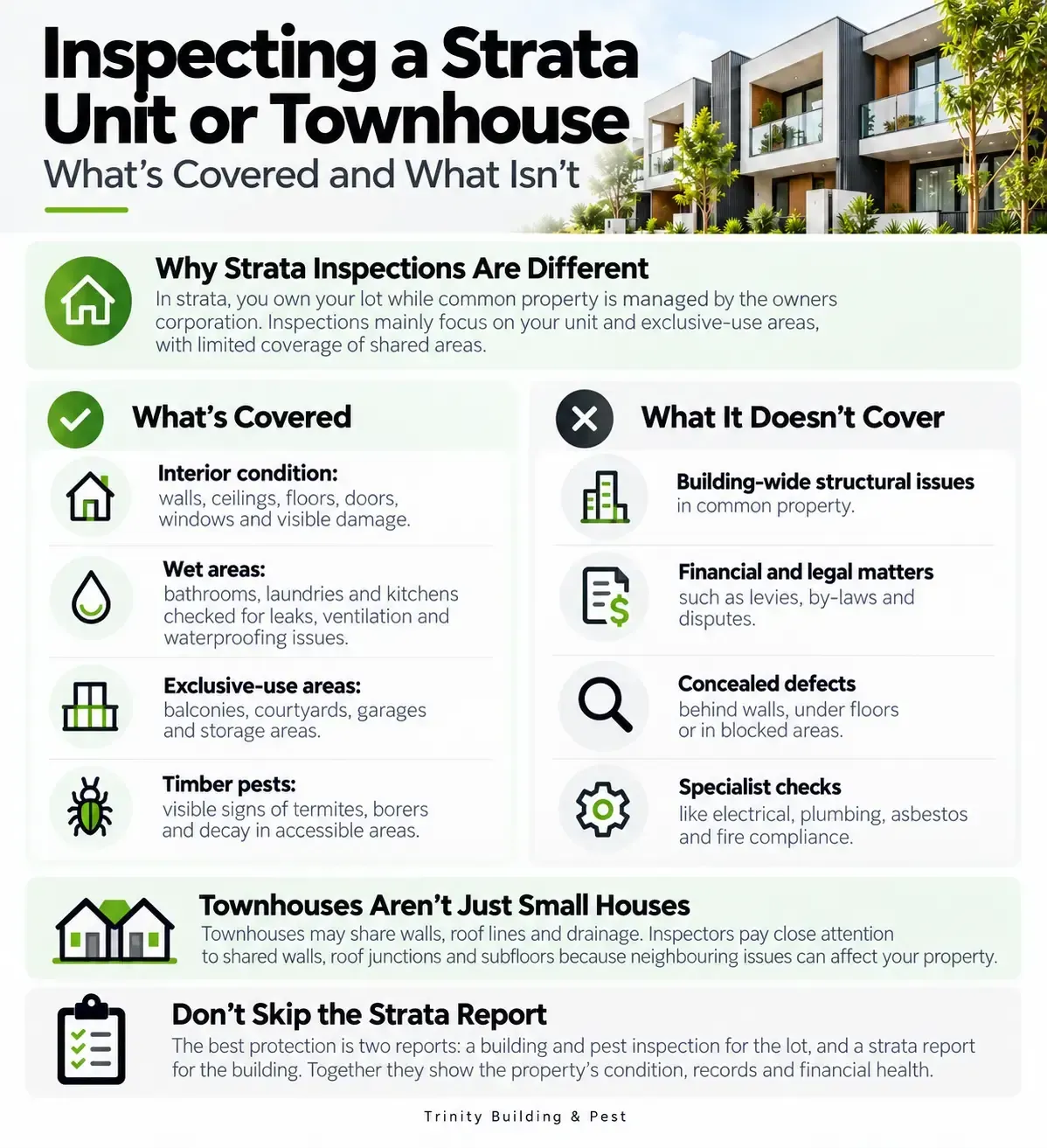
Why Strata Inspections Are Different
In a strata building, you own your lot, while the owners corporation looks after the common property, such as the roof, external walls, stairwells, and driveways. An inspector can only report on what they can access and see. That means a strata inspection focuses mainly on your unit and any exclusive-use areas, with limited coverage of shared areas.
What a Building and Pest Inspection Covers
A pre-purchase building and pest inspection on a unit or townhouse typically looks at:
- Interior condition: walls, ceilings, floors, doors, windows and fixtures, including cracking, dampness and signs of water damage.
- Wet areas: bathrooms, laundries and kitchens, checking for leaks, poor ventilation and failing waterproofing.
- Exclusive-use areas: balconies, courtyards, garages and storage areas that belong to your lot.
- Timber pests: visible evidence of termites, borers and decay in accessible areas, since termites can travel between neighbouring lots.
What It Doesn’t Cover
Even a thorough report has limits. In most cases an inspection will not cover:
- Building-wide structural issues: problems in the common property that cannot be accessed or assessed from your unit.
- Financial and legal matters: sinking fund balances, special levies, strata by-laws and disputes.
- Concealed defects: anything behind walls, under floors or in areas that are locked or blocked.
- Specialist checks: electrical, plumbing, asbestos and fire safety compliance, which need a separate specialist.
Townhouses Aren’t Just Small Houses
Townhouses often share party walls, roof lines and drainage with their neighbours. Moisture or pest activity in an adjoining home can become your problem, so your inspector will pay close attention to shared walls, roof junctions and the subfloor. If the whole building is a concern, our
apartment building inspections take a wider view.
Don’t Skip the Strata Report
The best protection for a unit buyer is two documents: an inspection report for the unit itself and a strata report for the building. Your conveyancer or solicitor can review the strata records, which show upcoming repairs, levies, and the building’s financial health. Between them, you get a full picture of the lot and the building around it.
Strata and Townhouse Inspections Across Sydney
We inspect units and townhouses throughout St George and Greater Sydney, including
Rockdale,
Hurstville and
Beverly Hills,
Miranda and
Cronulla in the Shire, and
Parramatta in the west. Our
first home buyer tips are a useful read if this is your first purchase.
Frequently Asked Questions
Does an inspection cover the whole strata building?
No. It focuses on your unit and exclusive-use areas, with limited reporting on accessible common property. A strata report fills in the building-wide picture.
Can termites spread between strata units?
Yes. Termites can move through shared walls, subfloors and common areas, so a pest inspection is worthwhile even for an upper-floor unit.
Is a townhouse inspection different to a house inspection?
The process is similar, but inspectors give extra attention to party walls, shared roofing and drainage that can affect neighbouring lots.
Do I need both an inspection and a strata report?
We recommend both. The inspection covers the physical condition of your lot, while the strata report covers the building’s records and finances.